ラベル monument の投稿を表示しています。 すべての投稿を表示

2012年6月6日水曜日

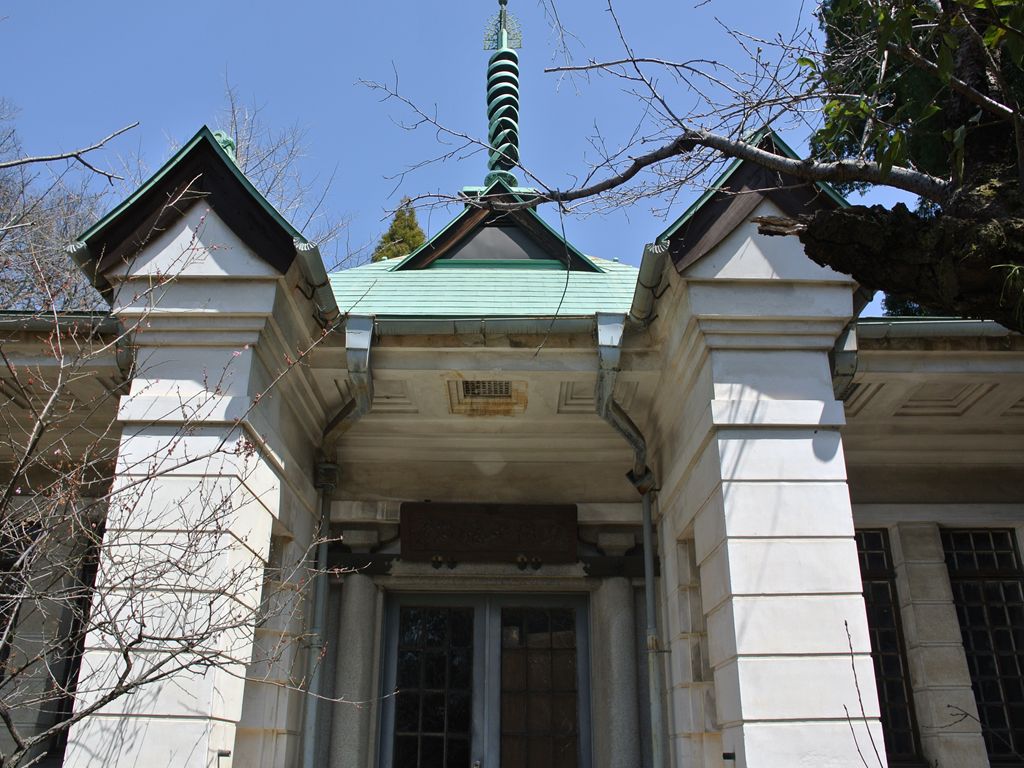
Hiroshima City Hall Main Building


Hiroshima City Hall Main Building


The Hiroshima City Hall Main Building was a four story, reinforced concrete structure which also housed the headquarters of Hiroshima Prefecture Air Defense. Preparations for containing incendiary bomb fires, including the dismanting of reardy buildings, had left the surrounding area vacant. However, as a result of the first atomic bombing in history, the building was engulfed in raging flames, burning most of the interior and claiming the lives of a large number of employees inside. After the flames abated, the site became a temporary aid station for scores of survivors from around the area who had been seeking help.

Old City Hall Exhibition RoomThe Old City Hall Exhibition Room, in order to convey the realities of the atomic bombing to future generations, displays materials which record the effects of the atomic bombing on the previous Hiroshima City Hall.
Pools are located above the four corners of this exhibition room. Because Hiroshima is striving to create a city with abundant water, green space, and clture, these pools impart an appearance fitting for a structure located in the center of Hiroshima City Hall. These pools were also installed with the intention of comforting the souls of the atomic bomb victims, many of whom died while cying out for water.
Additionally, original stones of the previous city hall remaining after the atomic bombing have been utilized in the abovegrand portion of the exhibition room, in the pool borders, and in the courtyard to the front of this structure.
(Quote from relief)

より大きな地図で Hirosima monument を表示

2012年5月17日木曜日

Koi Station


Koi Station


Because of the atomic bomb blast which struck at 8:15 a.m. on 6 August 1945 the greater part of the station facilities were destroyed in an instant. However, since both up and down trains had airedy left the station, only a few persons were in waiting room. This redused human loss to a minimum.
An immense number of sufferers swarmed to this station, seeking escape from the horror of the city.
(Quote from relief)

より大きな地図で Hirosima monument を表示

2012年5月10日木曜日

Postal Savings Office, Hiroshima Branch Building


Postal Savings Office, Hiroshima Branch Building

 Because of the intense blast from the atomic bomb which detonated at 8:15 a.m. on 6 August 1945, bookshelves, desks and chairs as well as window panes of the four-story reinforced concrete building were blown to pieces, resulting in a large number of casualties among the employees inside.
 Although the surroundings were enveloped in raging flames, some thirty employees remained inside the building, fighting bravely against the fire, and thus saved it from destruction.
 They had great difficulty collecting and putting in order the original register cards which had been scattered in all directions.
(Quote from relief)


より大きな地図で Hirosima monument を表示

2012年5月9日水曜日

Hiroshima Branch Building of the Bank of Japan


Hiroshima Branch Building of the Bank of Japan

 The interior of this building was completely destroyed by the intense blast of the atomic bomb's  explosion at 8:15 on the morning of 6 August 1945. Forty-two persons inside were killed. The external structure remained intact.
 Most banking facilities were wiped out. However, limited banking service was resumed on 8 August by converting the interior this bank into makeshift service centers for all the city,s banks.

(Quote from relief)


より大きな地図で Hirosima monument を表示

2012年5月7日月曜日

Tsurumi Bridge


Tsurumi Bridge

At the time of the bombing, mobilized sttudents and volunteer corps were dismantling buildings on the west side of this bridge  to prevent the spread of fire from incendiary bombs. Most of those who were mobilized for this work lost their lives as a result of the first atomic bombing in history. The handrails and other parts of the bridge began to burn due to the intense heat of the atomic bombing, but the flames were soon extinguished and many survivors crossed the bridge to take shelter at Hijiyama hill. The weeping willow barely survived the bombing, and is still alive to this day.
(Quote from relief)


より大きな地図で Hirosima monument を表示

2012年4月19日木曜日

Fukuya Department Store


Fukuya Department Store

Fukuya Department Store building, standing eight stories with two besements floors, was built using steel framing and reinforced concrete. The building's contents were destoryed and blown about by the intense blast and shock wave of the atomic bomb.
Fires broke out inside and soon spread throughout the entire building, and many died in the building. Only the building's framework and outer walls remained


より大きな地図で Hirosima monument を表示

2012年4月16日月曜日

Hiroshima Dentetsu Co., Ltd.


Hiroshima Dentetsu Co., Ltd.

On August 6, 1945, as a result of the first atomic bombing in the history of mankind, the wooden main office building was partially destroyed in an instant and the streetcar maintenance building and garage collapsed, burying and crushing many emproyees. There were also numerous lives lost among the rush hour passengers crowded aboard streetcars and buses being operated throughout the city. The transit system was left in a state of complete destruction, but due to the strenuous efforts of company employees. the streetcar service between Nishitenma-cho and Koi was quickly reopened 3 days later. The sight of streetcars operating once again helped to raise the spirits of the citizens of Hiroshima.

(Quote from relief)


より大きな地図で Hirosima monument を表示

2012年4月13日金曜日

Hondori Shopping Arcade


Hondori Shopping Arcade


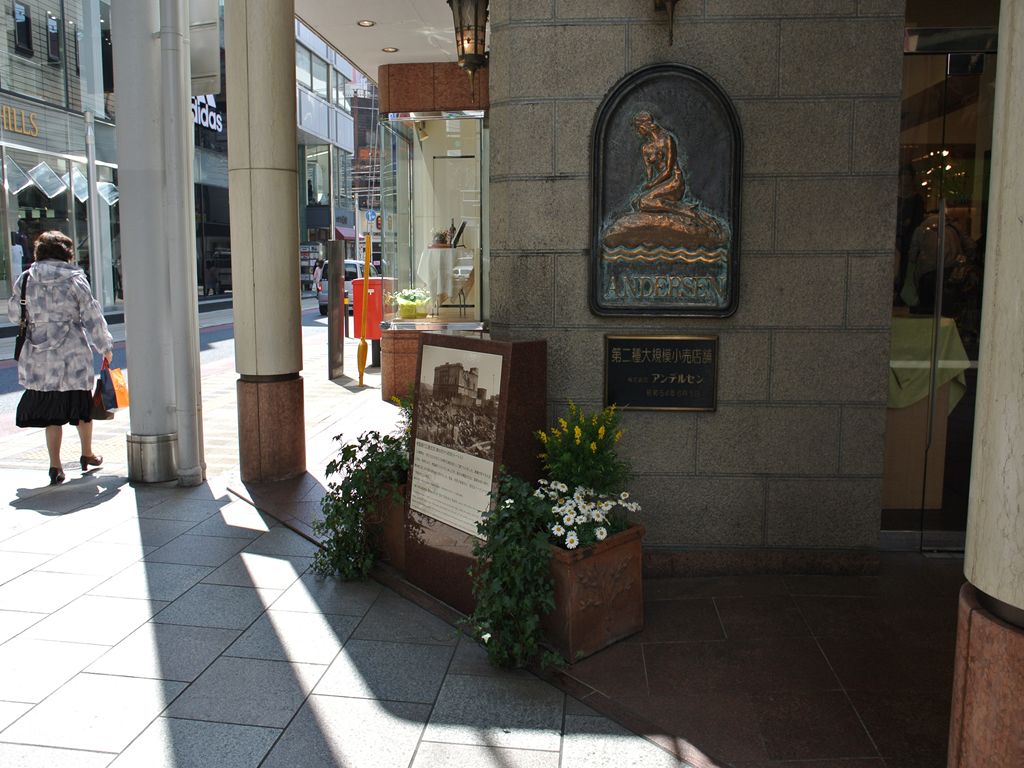
In 1945, Hondori was amomg the most porsperous, exciting street in town until the world's first atomic bombing instantly crushed every building and burned the district to the ground. Nearly everyone in the area died.
(From left to right: the gutted shells of the buildings of Yasuda life Insurance and the Teikoku Bank.)

(Quote from relief)


より大きな地図で Hirosima monument を表示

2012年4月12日木曜日

The Hiroshima Prefectural Industrial Promotion Hall


The Hiroshima Prefectural Industrial Promotion Hall


This building was completed in April of 1915 under the design and supervision of Czech architect Jan Letzel, capturing the fancy of the citizens of Hiroshima with its characteristic green dome. The atomic bomb exploded at an altitude of 580 meters apporximately 160 meters southeast of the industrial Promotion Hall, instantly killing everyone inside the building which was seriously damaged and completely burned out. In December 1996 this structure was added to the UNESCO World Heritage List as a reminder to the entire world of the horrors of the atomic bomb and symbol of global peace.

(Quote from relief)


より大きな地図で Hirosima monument を表示

2012年4月5日木曜日

Hijiyama Hill

Tamonin Tmple(approx. 1.75kilometers from hypocenter)

The roof of main building at Tamonin Temple lost most of its roof tiles to the blast wind. Nevertheless, in the evening of August 6, 1945, the Prefegtural Air Defense Headquarters was moved here from the Prefectural Government Building, which was crushed and buened to the ground. The next day, the Headquarters was moved again to East Polece Stasion, but this temple received relief supplies and distribusted rice balls the crowds of survivors that fled to Hijiyama Hill. The bell tower, its beams broken by the blast, has been preserved as a reminder.

This is a temple of tha "Shingon" Sect of Buddhism. It was moved to location in 1604, when Masanori Fukushima was the feudal lord of Hiroshima Castle. In the cemetery of the temple's preciencts, there is the grave of Sanyo Rai(1780-1832), a well-known Confucian scholar.


(Quote from relief)


Sanyo Buntokuden Memorial

This building endured the devastation of an atomic bombing on August 6, 1945.
The roof decoration(kurin) remains as it was after being deformed by the atomic bombing.
(Quote from relief)


より大きな地図で Hirosima monument を表示

Military cemetery


2012年4月3日火曜日

The Hiroshima Branch of the Teikoku Bank


The Hiroshima Branch of the Teikoku Bank

(Approx. 360 meters from the hypocenter)
This building was buirt in  1925 to be the Hiroshi ma branch of the Mitsui Bank. When the atomic bomb fell, it had by merger become the Teikoku Bank. The intense atomic blast tore the roof off the building and the northwest walls nerest the hypocenter  collaped. After the war, the building was renovated several time and presently houses a bakary.

(quote from relief)


より大きな地図で Hirosima monument を表示

2012年3月27日火曜日

Hypocenter


Hypocenter


Carried to Hroshima from Tinian Island by the Enola Gay, a U.S. Army B-29 bomber, the first atomic bomb used in history of humankind exploded approximately 580 meters above this spot. The city below was hit by heat rays of approximately 3,000to 4,000℃ along with a blast wind and radiation. Most people in the area lost their lives instantly. The time was 8:15 a.m., August 6, 1945.
(Quote from relief)


より大きな地図で Hirosima monument を表示

2012年3月26日月曜日

The Sarugaku-cho Neighborhood


The Sarugaku-cho Neighborhood

For centuries, since Hiroshima was a bustling castle town, Sarugakucho was a lively and diverse neighborhood known for noh actors, artisans, physicians, and shops of all types and sizes.
At 8:15 on the morning of August 6, 1945, the first atomic bomb used against humankind exploded about 580 meters above Shima Hospital in Saiku-machi, utterly destroying all people and property below it. Among the burned ruins stood the skeletal remains of the Hiroshima Prefecturel Industrail Promotion Hall (now, the A-bomb Dome), a grim reminder of what had been.

(Quote from relief)


より大きな地図で Hirosima monument を表示

Former Site of the Second Hiroshima Miritary Hospital


Former Site of the Second Hiroshima Miritary Hospital

The Second Hiroshima Miritary Hospital stood at the northwest end of Moto-machi an area with rows of miritary facilities. On the day of the atomic bombing, there were 330 employees and 750 patients inside the hospital. As a result of the explosion, the building was destroyed and went up in flames, resulting in heavy casualties. The few surviving employees constructed shelters made from straw mats and sheets of galvanized steel along the bank of the Ota River, where the beauty of the cherry trees had been a constant source of comfort for the patients. This shelter served as a first aid stasion where numerous victims were treated.

(Quote from relief)


より大きな地図で Hirosima monument を表示